
Article: When two families become one brand
When two families become one brand
Some things take a hundred and twenty-five years to arrive.
Tewün is one of them.
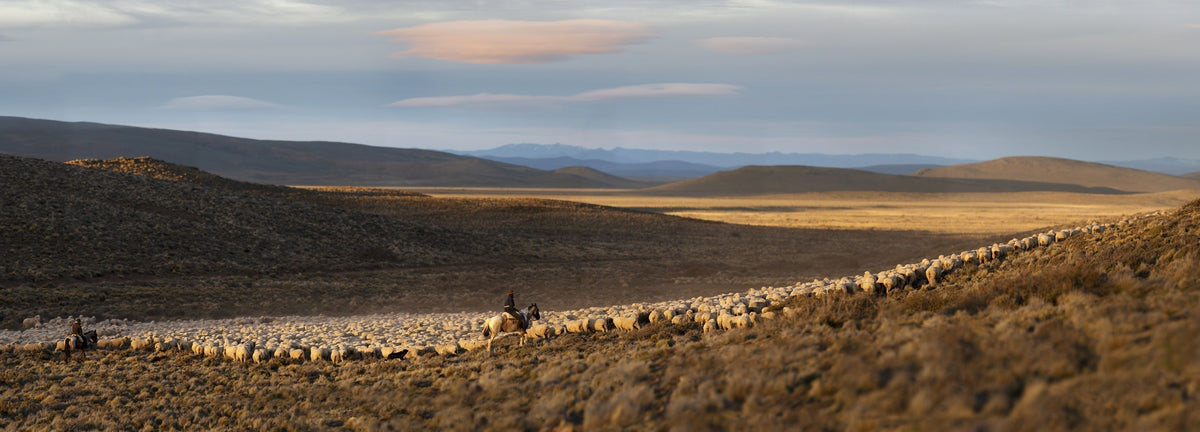
It took the Trannacks crossing an ocean to land that no one had seen. It took the Sorzanas building a textile empire from a backyard workshop. It took Ruso growing up between those two worlds, spending sixteen years in Europe, and then coming back to Patagonia because there was nowhere else he wanted to be.
And it took two more people to see what he had built and understand that it deserved to exist in the world.
The story of Ruso Sorzana and the people who believed in what he was building
The years that formed the eye
Ruso was born in Necochea in 1977. At sixteen, polo took him to Europe. He spent sixteen years playing professionally across Ireland, England, Switzerland, Spain, and France.
He met Clarita in Pinamar, the only year he didn’t go south for the summer, as the story goes. They married. An offer came: to help run Estancia Chimehuin in San Martín de los Andes, where Clarita, a qualified agronomist, would take on the administration. He left professional polo without hesitation.
Back in Patagonia, he became polo manager at El Desafío, a private resort in the mountains with two polo fields and a Greg Norman-designed golf course carved into the cordillera. He ran the polo program there for years, organizing matches, managing players, building the kind of sporting community that only exists in places where the landscape is serious enough to demand it.
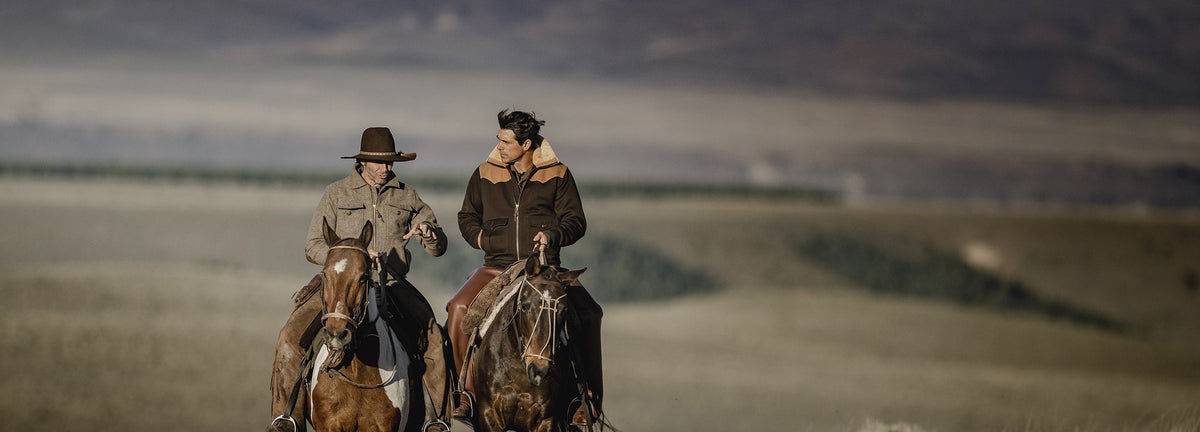
In parallel, he worked in leather: saddles, chaps, knives, cases, drawing animals and Patagonian landscapes. His aesthetic came together not through intention but through accumulation: merino vests over linen shirts, boinas with tailored jackets, the classic mixed with the personal in a way that felt completely natural.
He wasn’t styling himself. He was living. The style was a consequence, not the goal. That difference matters more than it sounds.
The man who saw it first
In 2017, Ruso’s cousin organized an asado to welcome a newcomer to the area. A close friend who would become one of Tewün’s founding partners was moving to Patagonia for a year, and the family wanted to introduce him to the people and the land he would be living among.
Like Ruso, he is Patagonian by origin. He grew up in the south, left for the world, and built his name in technology and finance as one of the most visionary minds of his generation. But Patagonia remained the place he returned to, the landscape that had formed his sense of what matters.
When two people share that, they don’t need to explain much to each other.
He saw what Ruso had built: the lifestyle, the eye, the authenticity that could not be manufactured. He saw it not as a personal style, but as something that deserved to exist in the world. Something that deserved to be known.
He became Ruso’s most important early supporter. He encouraged him to trust the vision, to formalize what had always been there, and to take it beyond Patagonia. He provided the backing, the guidance, and the belief that made it possible for the project to move from a private life into a real brand.
In 2019, backed by his support, Ruso began developing a project to bring the Patagonian lifestyle to people who sought it. Authentic experiences. Real land. The south as it actually is.
Then, in 2020, the world closed.
What the pandemic revealed
Argentina closed its borders. The tourism project paused. But Ruso, true to what he is, didn’t stop. He turned inward, toward the craft he had always practiced informally, the one the Sorzanas had built into his DNA across three generations.
He decided to make a garment line.
Not because the market needed another brand. Because the work needed to exist. Because there was something in the intersection of Patagonian merino, family history, artisan construction, and a lifestyle lived from the inside out that he had never seen done honestly at the level it deserved.
That decision became Tewün. A word the founders shaped from the Mapuche “Tuwun”, a term that speaks of origin, of place, of belonging to a specific piece of earth. They gave it their own form so it could carry its own meaning.
The one who came looking
In 2025, Nacho Figueras read about Tewün in Robb Report.
Nacho, the most recognized polo player in the world, a man who has spent decades in the orbit of the finest things made, read the article and reached out to Ruso directly. Not to buy something. To be part of it.
He came looking for them. Not the other way around.
That detail is not a small one. Nacho moves in exactly the world Tewün is built for. He understands luxury not as aspiration but as standard. He has worn every fine thing made. And something about what Ruso had built, and what it represented, made him want to put his name alongside it.
Three men. Three different lives. Three different angles on the same thing: a love for Patagonia, a respect for what is real, and a belief that the people who understand that world deserve something made specifically for it.
What this means for what you hold in your hands
When you wear a Tewün jacket, you are wearing 125 years of a family’s presence in Patagonia. You are wearing three generations of textile knowledge. You are wearing the taste of a man who spent sixteen years playing polo across Europe and decades more building a life in the south. And you are wearing the confidence of three people who know exactly what they are building, and why it matters.
That is not a brand narrative. That is what actually happened.
And it is, as far as we know, completely singular.
The Trannack family story | The Sorzana family story | The fiber we use | Explore the collection