

The other half of the story. The Sorzana family: from Piedmont to Patagonia
By Ruso Sorzana, founder of Tewün
You already know one half of where I come from. The Trannacks, the English family who bought land they'd never seen, crossed an ocean, built wagons in Quilmes, and spent six years finding a piece of Patagonia that no one else wanted. That story is about land, stubbornness, and the kind of commitment that doesn't ask for permission.
But there's another story. A different kind of journey, a different kind of ambition. This one starts in northern Italy, moves through Buenos Aires, and ends, unexpectedly, in the same place.
This is the Sorzana side.
A boy leaves the seminary
Enrique José Sorzana was born in 1823 in Piedmont, in northern Italy. His father died when he was eight. He was raised in a school run by priests, which in 19th century rural Italy, was one of the few paths available to a boy without family resources.
By the time he was nineteen, Enrique was studying for the priesthood. Then he had a disagreement with his superiors. The details are lost. What we know is that he left and didn't look back.
He had cousins in Argentina. Argentina was prosperous, expanding, full of possibility. He had nothing to lose.
In Buenos Aires he met María Turchi, a woman from Florence. They married and had nine children. Enrique spent the rest of his life as an entrepreneur: a builder's supply yard, various ventures, always working, never quite building the empire he imagined. But something in him, the willingness to leave, to risk, to start over, passed down through his children and grandchildren.
The workshop in the backyard
The real story begins in 1926, three generations later, in a backyard in Buenos Aires.
Mario Sorzana, Enrique's grandson, and his brother-in-law José Domenech set up a small workshop to make men's socks. Domestic production, basic goods, a small market. The brand was MINUÉ.
Two years later, they brought in Mario's fifteen-year-old brother: Enrique Juan Carlos, EJC as the family called him. He was young, but he was paying attention.
The men's sock line was doing well, so they expanded: women's stockings, made of silk, with stitching. Fine goods. The kind of thing that required skill.
EJC began traveling, to Europe, to the United States, to study trends, to understand what was coming before it arrived. He was developing something that would define everything he did: the ability to read the future in the present.
The company grew. They bought a warehouse on the corner of Nazca and Gaona in Buenos Aires. With his first real savings, EJC bought himself a piano. He had never had lessons. He taught himself to play.
Reading the future before it arrives
In 1939, the Second World War began. Silk was declared a war material, used to make parachutes, and overnight it became impossible to source. For a company that made silk stockings, this was an existential threat.
EJC saw the problem coming and moved before it arrived. Japan had not yet entered the conflict. He bought a shipping container's worth of Japanese silk directly from Japanese suppliers, before the door closed. While his competitors ran out of raw material, MINUÉ had enough to keep producing for years.
The next problem: Argentina had no silk spinning mills. If they wanted to keep producing, they'd have to build one themselves. They did. Argentina's first silk spinning mill, built from scratch because there was no other option.
In 1945, the war ended. EJC traveled to the United States again. He saw something he hadn't expected: women queuing around the block to buy nylon stockings. The material was new, synthetic, cheaper than silk, and the demand was extraordinary.
He came back to Argentina, bought land, and in 1946 built a nylon stocking factory. The new brand was TOPACIO: seamless, modern, the future. At first the product was too fine for the machines available in Argentina, so he imported American equipment. Then he trained local operators to run it.
By 1964, the company had more than 500 employees and was producing 24,000 dozen pairs of stockings per month. EJC's son Juan, Ruso's father, had already started working in the business.
What the family built, and what it cost
Then things fell apart.
Mario died in 1965. His brother Domingo died a year and a half later. EJC, suddenly alone at the top, found himself in conflict with the next generation, his nephews, who had different ideas about how the company should be run. The disagreement was irreconcilable. EJC left the company he had built.
EJC bought a ranch in Necochea, on the Atlantic coast south of Buenos Aires. He moved there with his wife and three sons: Guillermo, Germán, and Juan.
Not long after, the factory went bankrupt.
But the instinct didn't die. EJC's son Germán inherited his father's eye for fashion, the ability to see what people would wear before they knew they wanted it. Germán went to Florence and New York to study shoe design. The company he founded, Antinoli, became one of Argentina's most respected shoe brands. His daughter Valentina continues it today.
Where the two stories become one
In 1969, in Buenos Aires, at her sister's birthday party, Alicia Trannack met a young man named Juan Sorzana.
The English family who had crossed the pampas on wagons met the Italian family who had built a textile empire from a backyard workshop. They didn't know the full weight of that moment at the time. They were just two people at a party.
They married. They had five children: Guadalupe, Ricardo, Bautista, Andrés (Ruso), and Cecilia.
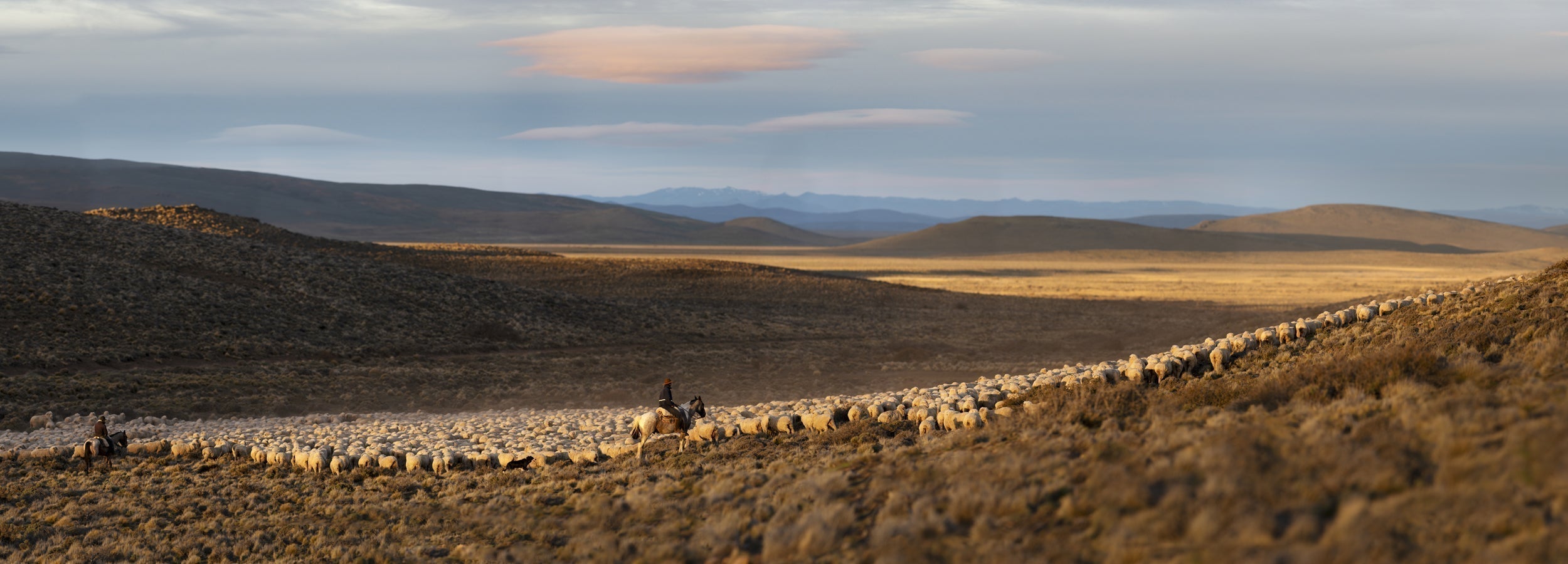
For years, Juan worked the family land in Necochea. Then the Argentine economic crisis of 1990 forced a decision. The family moved to Zapala, to the land the Trannacks had spent six years reaching a century before.
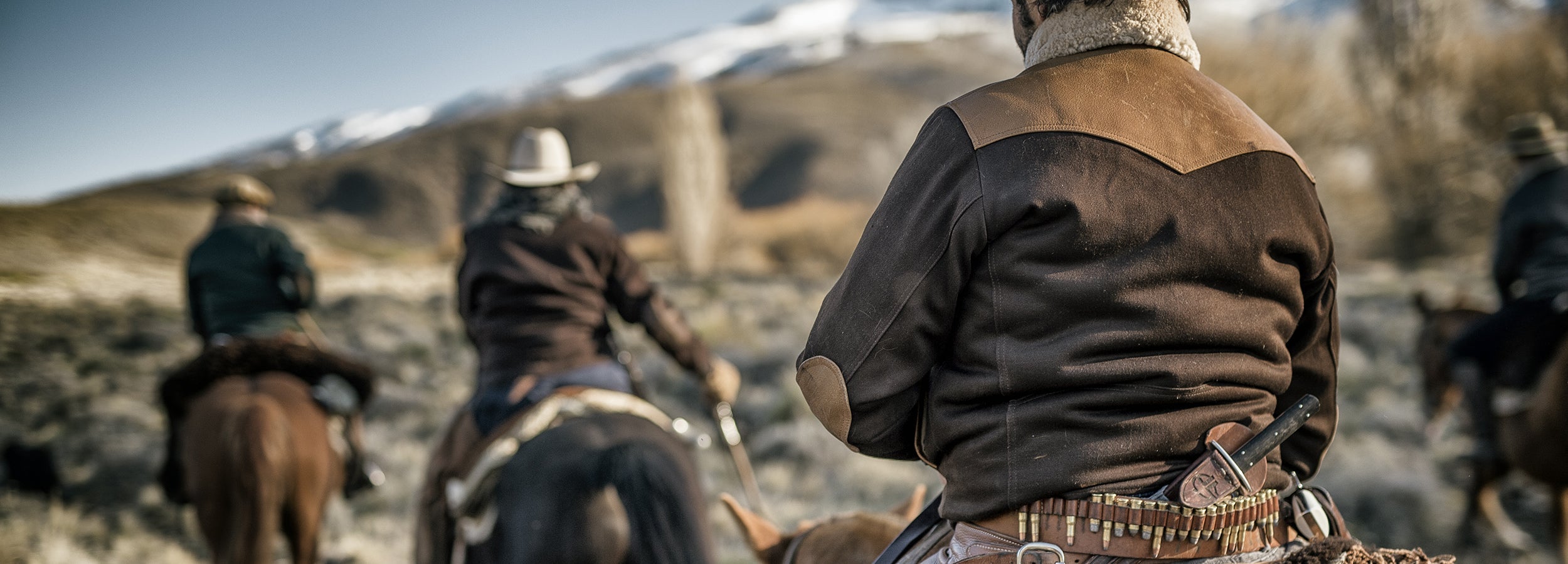
Ruso grew up there. On horseback. In the wind. In a place where the land is serious and the winters don't forgive.
When people ask where Tewün comes from, the honest answer is: from all of this.
From a boy who walked out of a seminary in Piedmont and got on a boat. From a fifteen-year-old who taught himself to spin silk in a Buenos Aires backyard. From a man who bought Japanese silk before anyone else knew there would be a war. From a woman who crossed the pampas on a wagon and stayed.
The materials we use: merino wool, leather, silk, alpaca, cashmere, are not decorative choices. They are the thread running through everything that came before.
That's not a brand story. That's just the truth.
Two families. One land. One garment.
The fiber we use
Explore the collection